Norwegian
  English

When Furuno developed the world’s first commercial fish finder in 1948, the goal was to help increase food production at a time when access to nutritious food was limited. Today, artificial intelligence, advanced sensors and data-driven decision-support systems are being used to address new challenges at sea. While the technology has changed dramatically, the underlying need remains the same: to provide people with better information so they can make better decisions.
Nearly 80 years after the first Furuno Fish Finder, the same fundamental needs still drives innovation.
New knowledge should improve everyday life
The end of the Second World War left many countries facing the immense challenge of rebuilding their economies, infrastructure and food supplies. Access to nutritious food was limited, and securing reliable sources of protein was a challenge that had to be addressed. For coastal nations, the sea was an important part of the solution. However, fisheries at the time were characterised by both high risks to fishermen and vessels, and considerable uncertainty when it came to locating fish.
In response to these challenges, Furuno developed the world’s first fish finder, the Furuno Fish Finder, which was introduced to the Japanese market in 1948 and internationally in the years that followed.
For the first time, fishermen had a reliable indication of whether fish were present beneath their vessel. The technology made searching far more efficient and significantly increased the likelihood of a successful catch. The result was improved profitability for fishermen, but more importantly, a more stable supply of nutritious food for a population struggling with food shortages.
The story of the world’s first fish finder is therefore not primarily a story about technology. It is a story about how new knowledge became a tool for solving real societal challenges and improving everyday life for people.

Information must become insight
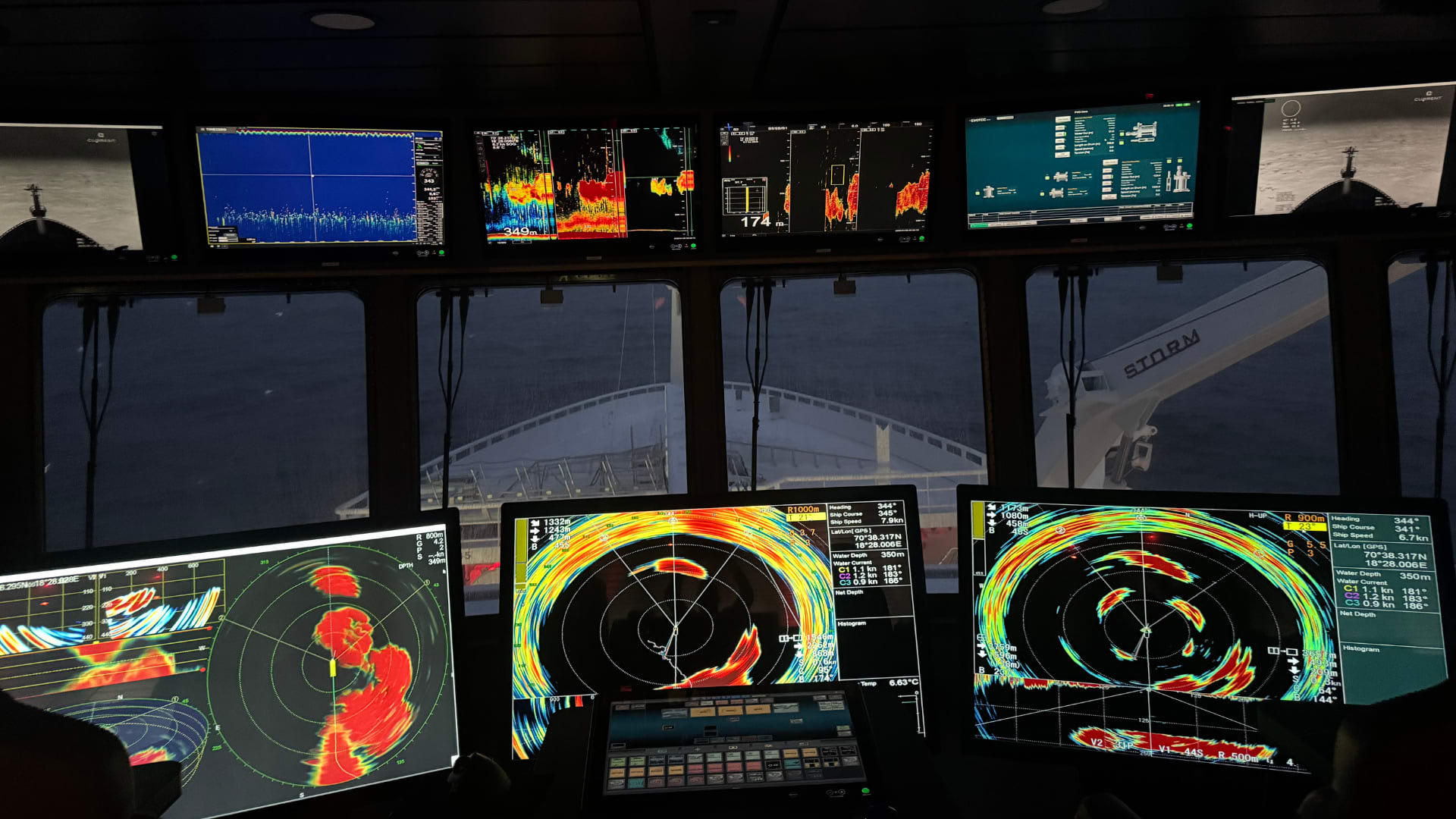
Modern fishing vessels now have access to a vast and continuously updated stream of information from fish finders, sonars, radar systems, electronic charts, satellite navigation, catch data and a wide range of other sources. Paradoxically, information itself remains a challenge. In the past, fishermen lacked knowledge of what lay hidden beneath the surface. Today, the challenge is understanding what the enormous volumes of data being collected are actually telling us.
Data alone rarely creates significant value. The real value lies in our ability to transform it into insight, sound decisions and effective action.
By today’s standards, the information provided by the first fish finder was limited and not always easy to interpret. Yet the technology was groundbreaking, and its impact was immense. Perhaps the focus of technological development today should not be on collecting more data, but on helping us make sense of the data we already have.
Artificial intelligence and advanced analytics make it possible to identify patterns, relationships, risks and opportunities that would otherwise be difficult to detect. Just as the fish finder once enabled us to see what was hidden beneath the sea, today’s technologies can help us better understand what might otherwise remain hidden within the data.

The real value extends far beyond a good catch
For fishermen, new technology is first and foremost about solving practical challenges at sea. Finding fish, navigating safely, reducing risk and carrying out operations efficiently and profitably. Yet the benefits of a successful fishery extend far beyond the vessel itself.
When Furuno introduced its first fish finder in 1948, the goal was to give fishermen better tools for locating fish. The result was a much-needed increase in food production. The story continued with the development of marine sensors, decision-support systems and mission-critical communication technologies. Over nearly 80 years, these innovations have contributed to safer and more profitable operations at sea, safer maritime transport and a more sustainable use of ocean resources.
Through long-term initiatives such as Ocean 5.0 and MEGURI 2040, Furuno continues this work at the intersection of technological innovation and social responsibility.
We are developing solutions that harness marine data to support better stewardship of shared resources, while using artificial intelligence to provide even stronger decision support for operations and transportation at sea. The goal remains the same as it was in 1948 – to make knowledge and technology accessible in ways that help people meet the challenges they face.
Close to Our Customers – Every Day
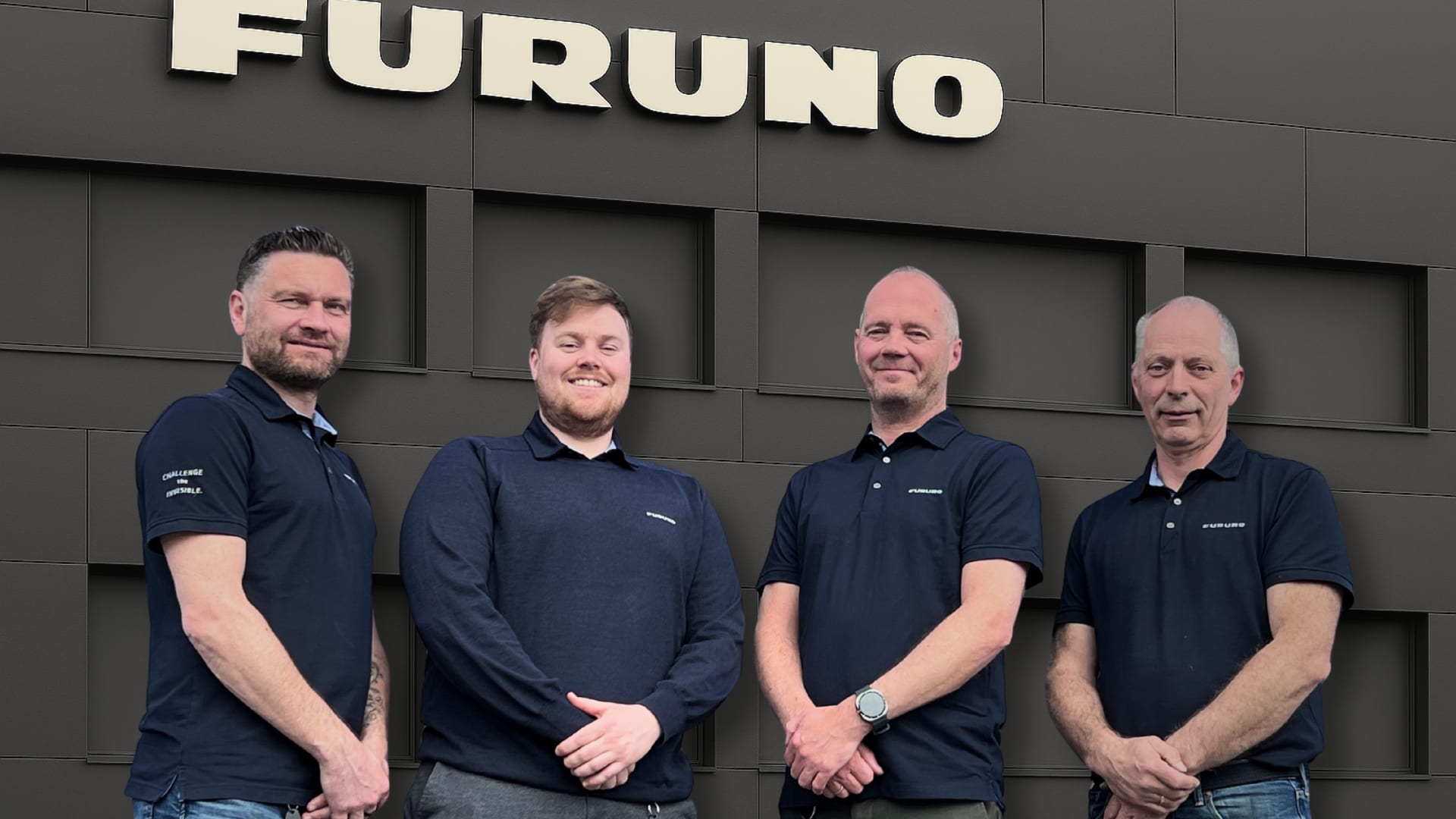
Behind every technology and every brand are people. At Furuno Norway, our specialists in hydroacoustics, navigation and communications work closely with fishermen across the Norwegian fishing fleet every day. Through technical support, training and ongoing advice, we serve as a link between Furuno’s development teams in Japan and the people who rely on our solutions at sea.
This close dialogue with fishermen provides valuable insights that help shape the future development of our products, while ensuring that users receive prompt assistance whenever challenges arise.
Our goal is simple: to be a knowledgeable, accessible and trusted partner for the fishing industry.
To learn more about Furuno Norway and our solutions, visit www.furuno.no.